
Agricultural Concrete
Agricultural Concrete for Feedlot, Barn & Ag Floors in Central Alberta
Poured concrete shaped to the way a farm actually works: feedlot floors, cattle alleys, barn and dairy floors, bunker and feed-bunk floors, and pads, placed on your site and finished to take a daily beating.
Why pour it
Poured concrete built for the way a farm works
Farm concrete lives a brutal life: hooves, loaders, and grain trucks above; manure, silage acids, and washdown below; Alberta freeze-thaw running through all of it.
A properly specified slab beats all three at once instead of rutting, potholing, or spalling. A bare or gravel yard turns to mud and costs you feed efficiency; a hard, well-drained floor pays its way back in animal performance, not just durability.
The right ag mix is engineered for the job: air-entrained against freeze-thaw, dense and low-permeability against manure and silage acid, and thick enough for the loads it carries.

What we pour
Agricultural concrete applications
Four kinds of farm floor and pad, each finished and sloped for what happens on it.
Feedlot floors & cattle alleys
A grooved or broom finish gives hooves grip and keeps footing safe, and the surface is sloped so liquid and manure drain off the walking area instead of pooling on it. Grooves run with the direction cattle travel.
Barn & dairy floors
Floors balanced for traction and cleanability. A monolithic slab-and-cove pour removes the floor-to-wall seam where bacteria and moisture hide, which is a real sanitation win in a barn or dairy.
Bunker silos & feed bunks
Silage effluent is acidic and hard on ordinary concrete, so bunker and feed-bunk floors call for a denser, higher-strength mix and a slope that drains effluent away rather than letting it sit in the surface.
Ag pads, bin pads & aprons
Grain-bin pads, equipment and shop slabs, fuel pads, and yard aprons, sized to the load they carry, from lighter pads up to heavy-truck and large-bin pads built thicker and reinforced.
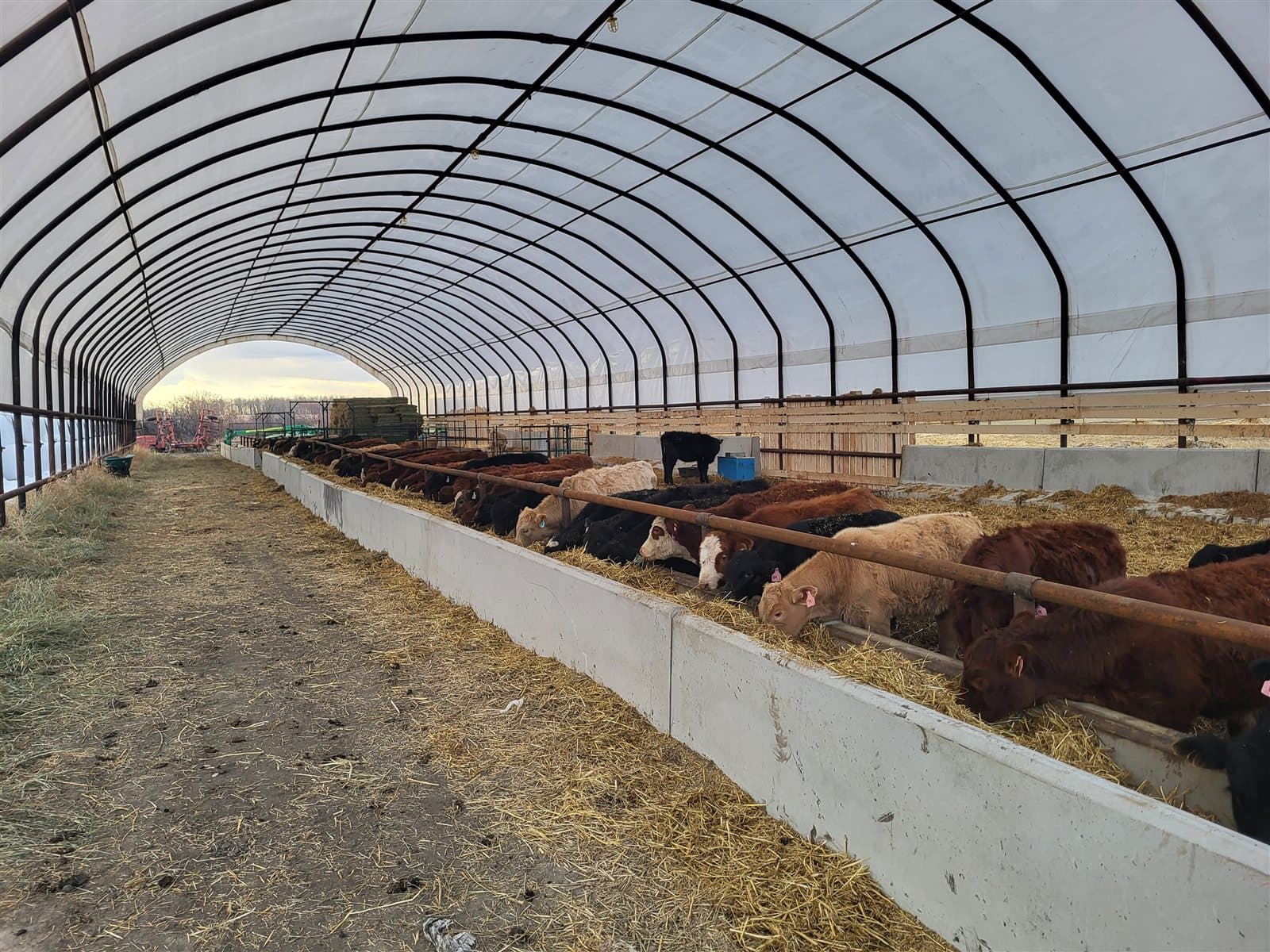
Poured, sloped, and finished in place, shaped to your yard.
The conditions
Built for Alberta conditions
Three things designed into every ag pour, because central Alberta and a working farm leave no room for a floor that only half-works.
Air-entrained for freeze-thaw
Entrained air gives freezing water room to expand, so the slab does not crack and spall through the freeze-thaw cycles central Alberta sees every year. It is the single biggest reason a farm floor lasts.
Grooved for traction
Finishes are chosen on purpose: grooved or broom where cattle need grip on a wet surface, a tighter float where cleanability matters. Texture and groove spacing are matched to the animals and the traffic.
Slope & drainage designed in
Alleys kept level across their width but sloped along their length to a collection point, so washdown, manure, and effluent run off the surface instead of soaking in or standing.
Poured vs precast
Why pour on site instead of precast
For floors, alleys, and pads, pouring in place is usually the better fit, and it is what Onsite does.
Shaped to your yard
Custom dimensions, the right grade, and odd corners handled. The floor fits the space exactly.
Fewer seams to fail
Large, continuous monolithic surfaces with control joints only where we want them, so fewer joints come apart.
No crane, less transport
No crane access to arrange and far less to haul in, which suits a live, working farm.
Need precast instead? Our sister company handles cast-in-the-yard products where that is the better fit.
The fine print
Agricultural concrete FAQs
What farm and feedlot operators ask us most before a pour.
No. A grooved or broom finish gives hooves grip even on a wet surface, and the texture and groove spacing are matched to the animals and the traffic. Traction is a finish decision we make on purpose, not an afterthought.
With a denser, higher-strength, low-permeability mix and a slope so liquids drain rather than soak in or pool. Areas with heavy exposure, like bunker and feed-bunk floors, are specified for that exposure.
That is exactly what an air-entrained ag mix is for. The entrained air gives freezing water room to expand, so the slab resists the cracking and spalling that freeze-thaw causes. Proper curing matters too, and it is built into the pour.
It depends on the load. Lighter pads are commonly around 4 inches, equipment and bin pads around 6 inches, and heavy-truck or large grain-bin pads 8 inches or more with reinforcement and a deeper footer. Every pad is sized to what is going on it.
Pouring on site means the floor is shaped to your exact yard: custom dimensions, the right grade, and odd corners handled, as one continuous sloped surface with fewer seams to fail, and no crane access needed. Where precast is the better fit, our sister company handles that side.
Yes. Pours are planned and staged around live farm work so the operation keeps moving while the concrete goes down.
Request a quote
Pouring for your operation?
Send the job and we will quote it. Site visits across central Alberta, no online prices, no obligation.